
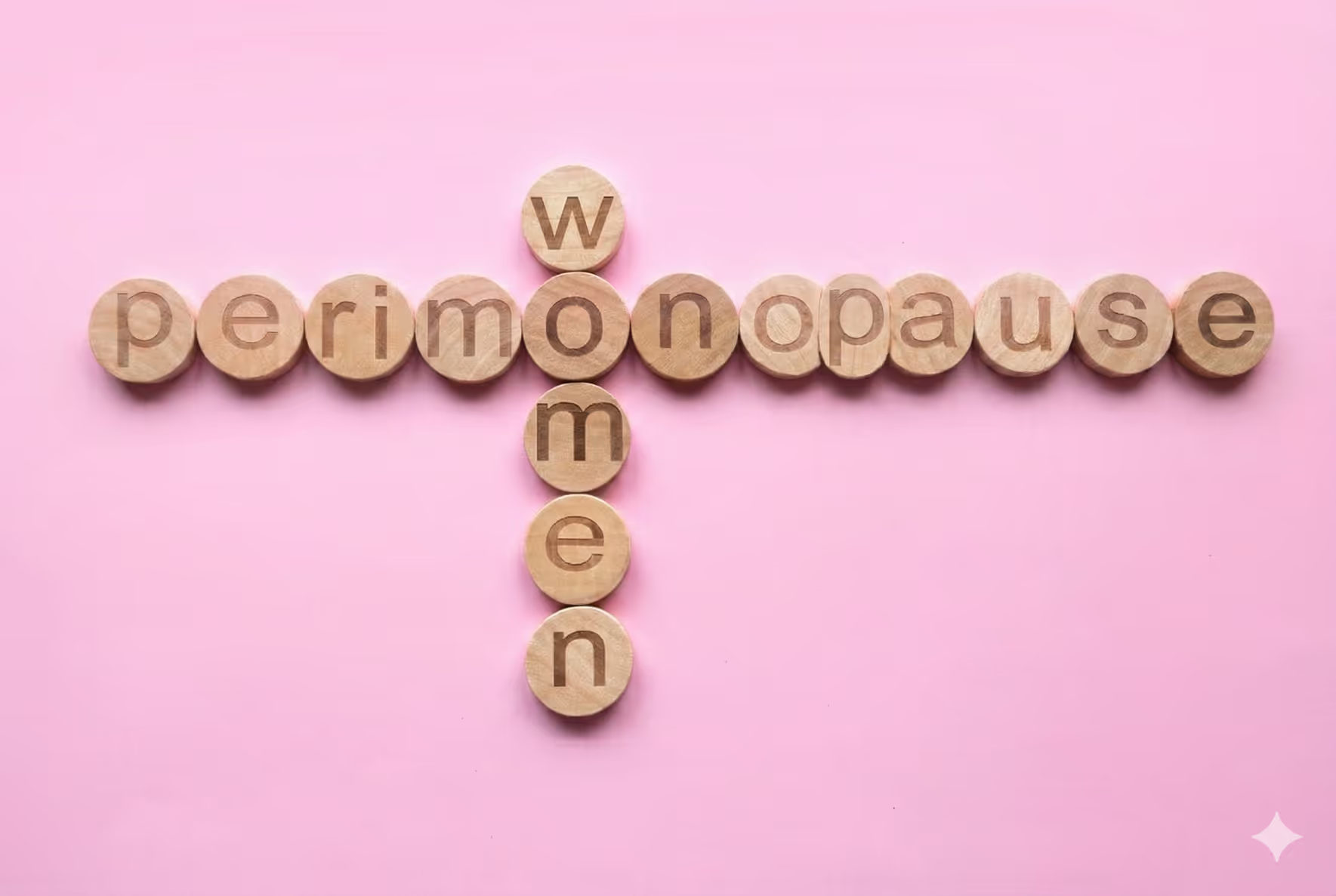
Navigating the Perimenopause Transition
Perimenopause is a transitional phase that can catch many women off guard. You feel like you’re doing everything right with your diet and workouts, but suddenly you notice changes in your body. Your sleep patterns can become unexpectedly unpredictable, and your mood shifts as your energy dips. This can be frustrating when those healthy routines that once kept you feeling strong suddenly have you feeling depleted.
The good news is, you’re not imagining these symptoms, and you’re certainly not alone. What can feel like being “broken,” is simply a sign of transition. It’s also an indicator that it’s the perfect moment to rewrite your fitness strategy.
Thesis Personal Training is Here to Help
During perimenopause, generic programs are far from effective because your routines and lifestyle are facing new challenges. This is a season when a personalized and science-backed approach to fitness is a must. That’s what our team of personal trainers at Thesis Fit can provide. When your sleep, energy, and stress are in flux, you need a professional to guide you to new ways of approaching workouts so you can stay consistent and feel your absolute best. It’s a path to reclaiming your life, sense of self, and overall health in a period of great transition.
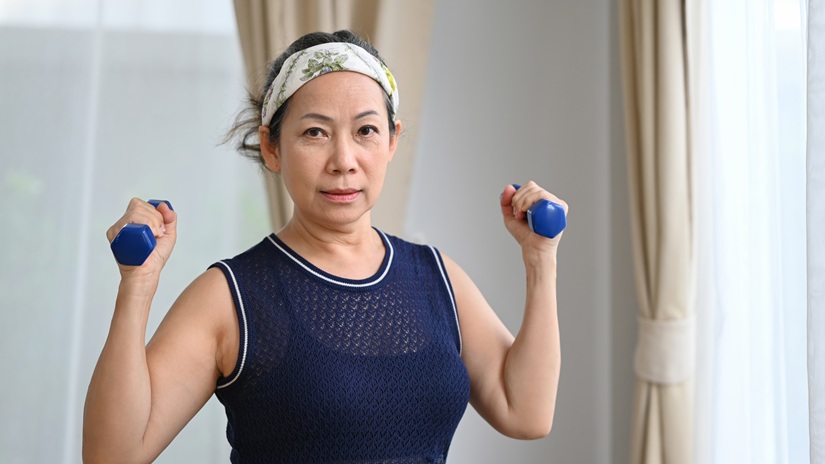
Starting your perimenopause strength training program
Before you jump into a new perimenopause strength training program, it’s important to understand the science behind what’s actually happening to your body. This is more than just a reproductive shift, but effectively a time of full-body recalibration. When you understand what’s going on below the surface, you can more fully understand why strength training for perimenopause and resistance training for perimenopause specifically are important.
Focus in on Hormone Changes
Taking back control begins with seeing why you might feel out of control during perimenopause. Menopause symptoms like sleep disruptions can significantly disrupt your normal exercise and eating habits. It is actually this disruption in habits—not hormonal changes themselves—which is what leads to weight gain and worse body composition. During this transition, women are more prone to:
- Mood fluctuations
- Fatigue
- Sleep disruptions
- A shift in fat distribution
A new approach to fitness during perimenopause can be designed to help you maintain your habits and work with these lifestyle changes, and not against them, for more successful results.
Muscle Changes are on the Horizon
It is often mistakenly claimed that muscle loss is accelerated during the menopause transition. However, estrogen-based hormone therapy does not stop muscle loss since it is not actually due to low estrogen levels. In reality, men and women lose muscle mass at the same rate throughout life, and it is strictly due to inactivity and a lack of resistance training. There is a reduction in strength in women who don't engage in proper structured resistance training, but it has nothing to do with menopause itself. Fortunately, muscle loss is easily mitigated with proper resistance training 2-3x per week.
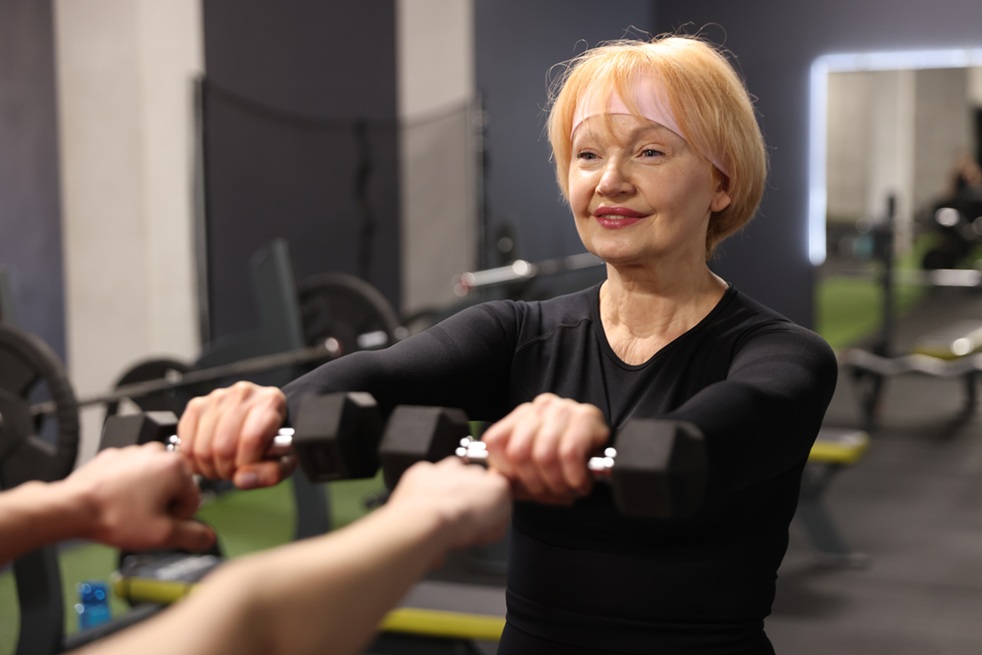
The Truth About Cortisol and Cardio
You may have heard that high-intensity cardio workouts spike your cortisol levels and cause harm. In truth, cortisol fluctuations from high-intensity exercise are completely normal and do not have any negative impact on fat gain, anxiety, or sleep disruptions. While menopause symptoms can certainly include sleep disruptions, they are completely unrelated to cortisol from training. There is no human data showing that normal cortisol fluctuations have any negative impact.
Additionally, long cardio will not have any negative impact on body composition or on stimulating adaptations from your resistance training. A well-rounded program that includes functional strength training, specifically designed to help you stay active and consistent, is the solution you need to restore your balance.
Why strength training for perimenopause matters
Every woman will experience perimenopause a bit differently, which makes a customized and science-backed training program that much more important. A major myth is that menopause decreases your metabolic rate. Energy expenditure is actually stable in men and women until our mid to late 60s, and previous papers on the subject that are commonly referenced were actually retracted and are not to be considered.
What appears to be excess fat storage is actually just a shift in fat distribution in women that generally winds up around the hips and midsection, giving the appearance of more fat gain than is normal, but it is not actually accelerated. Body fat increases the same with age among both sexes and regardless of menopause. Strength training remains the ultimate way to maintain lean mass and optimize your body composition through these changes.
Fatigue and Trouble Sleeping
At Thesis Fit, we find that energy-managed training is key to combating the fatigue associated with menopause-related insomnia. Because sleep disruptions can derail your diet and exercise habits, our trainers help you regulate the intensity of each session so you stay consistent and energized, but never feel drained. You don't need to fear workout-induced cortisol; you simply need a plan that supports your daily habits and beats burnout.
The benefits of resistance training for perimenopause
When bone density loss is a concern during perimenopause, load-bearing strength work is a terrific solution. Our team will help show you how heavy lifting can be an armor against osteoporosis and reduce the risk of long-term injury. It's important to note that stability is not a trainable quality, and there is no such thing as a reduction in stability. Instead, what occurs is a reduction in strength—which is why our resistance training programs are designed specifically to rebuild your strength and stimulate bone growth over time.
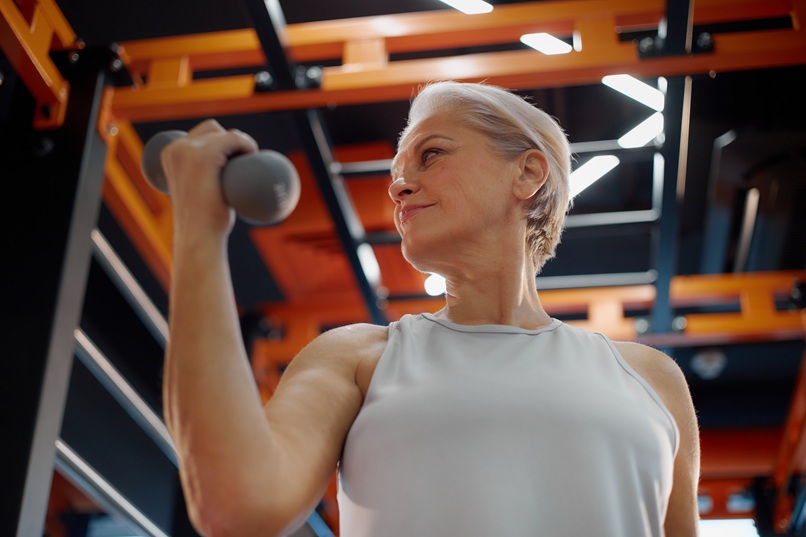
Anxiety, Irritability, and Mood Swings
At Thesis Fit, our approach to strength training incorporates mental health. We find that strength training programs can boost dopamine, endorphins, and serotonin alike. This is a great way to naturally improve your mood during perimenopause while simultaneously decreasing those feelings of anxiety and irritability.
Experience the Thesis Fit Difference
When you partner with Thesis Fit, you’ll quickly discover that we’re a team that believes a personalized approach matters. Training during perimenopause needs to step out of the generic and into a customized form that fits your body as it's changing daily. We prioritize customization over guesswork and will build a plan just for you that takes your experiences into account. We’ll look at every unique factor including:
- Energy levels
- Symptoms
- Stress points
- Recovery trends
- Hormonal fluctuations
To us, personalization, taking these factors into account, is non-negotiable. To that end, our trainers are more than happy to adjust workout plans in real time to meet your needs. This could include integrating mobility training, breath work, low-impact conditioning, or slow and heavy strength work as needed.
Helping You Reclaim Your Strength
At Thesis Fit we believe that lifting weights during this transition works. It’s a strategic way to build muscle, improve sleep routines, stabilize your mood, increase your energy, and reduce fat over time. It’s also a wonderful way to find the emotional stability you might feel you're lacking in this stage of life. To this end, strength training can be a grounding force in giving you:
- A way to reconnect with your body
- A sense of control
- A boost in mood-regulating hormones
- A measurable path to improvement
We’re here to guide you every step of the way at all our DC Gyms, so you can find the balance, confidence, and strength you deserve to enjoy in every phase of life. We also offer personal training for seniors to ensure your foundation stays strong into your later years.
Reach Out Today to Learn More
Perimenopause is a natural transition, but that doesn’t mean you simply have to struggle through it. When you’re looking for a Washington DC Gym where you can feel supported at every turn, Thesis Fit has you covered. Reach out today to learn more about our customized training plans and to book your free consultation. We can’t wait to hear from you soon!

Written by Ori Perlman
Ori Perlman is the Founder and CEO of Thesis. A former special operations combat specialist, Ori mastered peak physical conditioning before transitioning to the corporate world. While studying in Hong Kong, he built a premier training business helping high-power professionals optimize their fitness and physique around demanding schedules. Today, he leads Thesis in delivering data-driven, sustainable health transformations tailored for high-achievers.
Washington DC Services
Tysons Services
- Couples Personal Training Tysons
- Functional Strength Training Tysons
- HIIT Workouts Tysons
- Injury Prevention Rehab Tysons
- Muscle Building Tysons
- Nutrition Coach Tysons
- Personal Trainer for Seniors Tysons
- Physical Therapy Tysons
- Postpartum Personal Trainer Tysons
- Prenatal Personal Trainer Tysons
- Sports Performance Training Tysons
- Stretching and Mobility Tysons
- Weight Loss Tysons


