
When "Discharged" Doesn't Mean You're Actually Done
You finish your last physical therapy appointment in McLean, Va. The pain is gone, your range of motion looks normal on paper, and the therapist signs off. Most people treat that moment as the finish line. It isn't. It's a checkpoint.
Physical therapy does exactly what it's designed to do: it gets you out of pain and restores basic function. What it doesn't do is rebuild the strength, capacity, and confidence you need to go back to real life, real sport, or real training at full intensity. That gap between "cleared" and "recovered" is where a lot of people get stuck, and it's exactly where a structured training plan needs to pick up.
The Gap Between "Cleared" and "Recovered"
A PT discharge and true physical readiness are not the same measurement. One tells you the injury is no longer stopping you. The other tells you your body can actually handle load, speed, and impact again.
Here's what typically separates the two:
- Pain-free: doesn't mean strength has returned to both sides equally
- Full range of motion: doesn't mean you can control that range under a heavy load
- Cleared for daily activity: doesn't mean cleared for sprinting, lifting heavy, or cutting on a field
- Feeling normal: doesn't mean you'd pass a strength test against your uninjured side
Pain-free is not the same thing as strong. That distinction matters more than most people realize, because it's the reason so many people reinjure the same area within a year of getting the all clear.
Why Physical Therapy Has a Ceiling (Not a Failure)
This isn't a knock on physical therapy. PT does its job well: reducing pain, restoring mobility, and getting healing tissue back on track. That's a specific, medical goal, and it's a different goal than building peak strength or athletic capacity.
Think of it as a handoff point rather than a shortfall. A physical therapist's scope is to get you functional and safe for daily movement. Rebuilding the strength, power, and resilience to train hard again is a separate phase, and it requires a different kind of expertise. Treating discharge as the end of the process is where the plan breaks down.
What Happens If You Skip the Bridge
Stopping at "my PT cleared me" and jumping straight back into your old training routine carries real risk. During the injury period, the affected limb or area almost always loses strength and muscle mass faster than people expect, even with a good rehab program.
This shows up clearly in objective testing. Clinicians commonly use a measure called the limb symmetry index, comparing strength and hop performance between your injured and uninjured sides, and a common benchmark for return-to-sport readiness is reaching at least 90 percent symmetry between limbs. Research on athletes returning from injuries like ACL reconstruction has found that a meaningful share of people who get cleared still haven't closed that strength gap, and second injuries remain frustratingly common in that population.
That's the case for testing over trusting how you feel. A body can feel ready and still be sitting well below its baseline capacity. This is exactly why sports physical therapy McLean clients so often need a structured strength phase after discharge, not just a return to whatever they were doing before.
The Thesis Approach: Coordinating Rehab and Training as One System
This is the gap we built our process around. When a client comes to us after physical therapy in McLean Va, we don't hand them a generic program and hope for the best. We start by reviewing their PT and physician history so we understand exactly what happened, what's been treated, and what limitations are still in play.
From there, we establish a real baseline using clinical-grade tracking, not guesswork. That includes strength testing on both sides, movement screening, and biometric data through the Thesis App. Training, nutrition, and recovery get coordinated as one plan instead of three separate efforts pulling in different directions.
Every trainer on our floor is a full-time, salaried professional, not someone running personal training as a side gig between other jobs. That matters here specifically: rebuilding someone safely after an injury takes a coach who's invested enough to actually track your data week over week, adjust in real time, and stay in the loop with your medical team when needed. Whether someone found us searching "sports physical therapy McLean," or came in through a straightforward rehab personal trainer referral, the process starts the same way: measure first, then build.
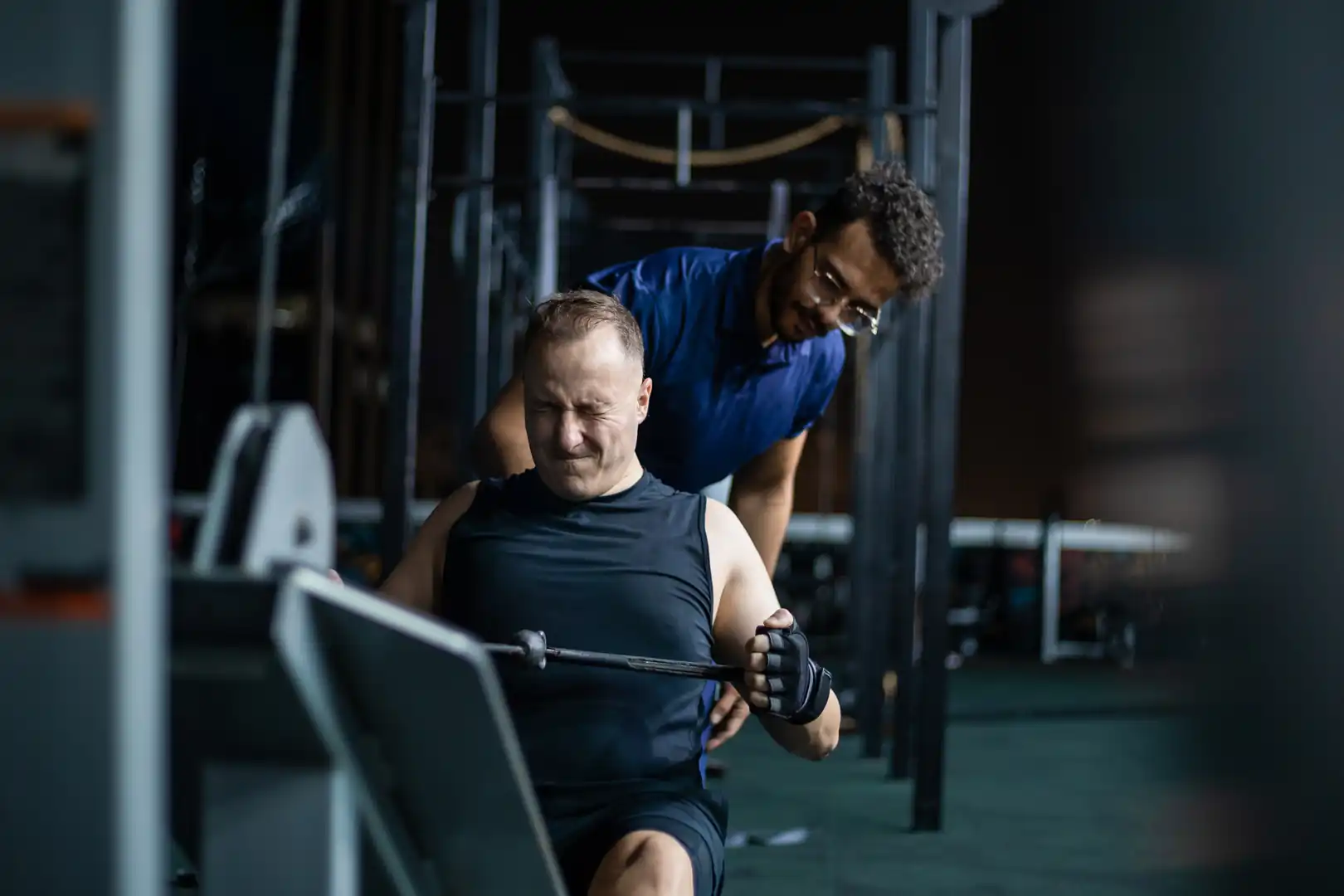
What Full Recovery Actually Looks Like, By the Numbers
We don't consider someone fully recovered because they say they feel fine. We consider them recovered when the data says so. That means looking at:
- Strength symmetry: between the injured and uninjured side, ideally within about 10 percent of each other
- Range of motion under load: not just range of motion at rest
- Movement quality: checking for compensations like favoring one leg or bracing through the hips
- Confidence under stress: meaning the client will actually push the area without hesitating or protecting it
This matters just as much for someone dealing with a nagging issue as it does for a post-surgical case. A client who came to us as a personal trainer back pain search still needs the same kind of objective check-in before we load them up the way they want to be loaded.
The First 90 Days Back: A Staged Rebuild
Coming back from an injury isn't a single step, it's a sequence. We break the first three months into stages instead of throwing someone back into their old program on day one.
- Weeks 1 to 3: Stability and control work, low load, often built around the same mobility and stretching personal trainer work that got you through PT, focused on relearning proper movement patterns without compensation
- Weeks 4 to 8: Progressive overload reintroduced gradually, tracking strength gains on both sides to close any remaining gap
- Weeks 9 to 12+: Return to full intensity or sport-specific movement, the same strength and agility training near me clients ask for by name, once testing confirms the client can actually handle it
Every stage is monitored, not assumed. If someone isn't ready to progress at week four, we don't push it just because the calendar says they should be. The plan follows the data, not a generic timeline.
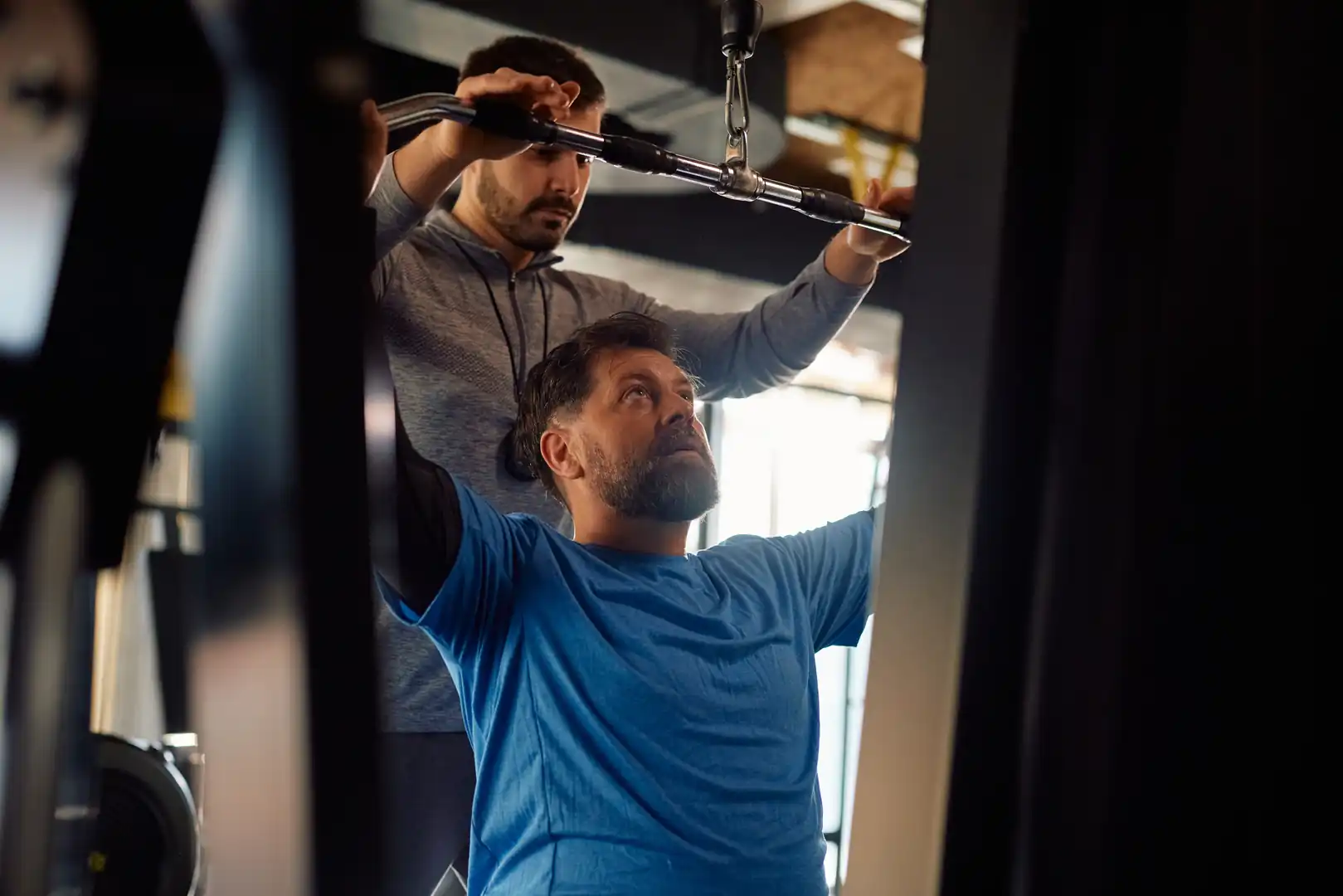
Signs You're Progressing Well (and Signs to Slow Down)
Some markers tell you the plan is working. Others tell you it's time to pump the brakes before something gets worse.
Good signs to watch for:
- Strength numbers: on the injured side are closing in on the healthy side
- Movement: looks the same on video from both angles, no visible favoring
- Session tolerance: you can push through a full session without guarding the area
Red flags that mean it's time to adjust:
- Compensation patterns: showing up again, especially under fatigue
- Strength gap: stalled or widened instead of closing
- Pain under load: returning even if it wasn't there during lighter movement
Any of those should trigger a conversation with your trainer, not a decision to just push through and hope it resolves on its own.
Your Trainer Is the Missing Piece
Closing the distance between "cleared" and "recovered" takes more than motivation. It takes a credentialed trainer who's working from actual data instead of a copy-paste program.
If you've ever typed "mobility coach near me," hoping to find someone who understands both the rehab side and the performance side, that's the exact combination this process is built around. A generic return-to-gym plan doesn't account for what your body has been through. A rehab personal trainer who tracks your numbers does.
Do I need a doctor's or physical therapist's sign-off before starting training again?
Yes, if you're coming off a recent injury or surgery, we want clearance from whoever managed your care before we start loading anything aggressively. It protects you and gives us a clear starting point.
How soon after finishing physical therapy should I begin a structured training plan?
Ideally right away, or as close to it as possible. The longer the gap between discharge and structured training, the more strength and stability tends to slip, so starting promptly helps preserve what PT already rebuilt.
Will my trainer communicate directly with my physical therapist or physician?
When it's useful and you're comfortable with it, yes. We'd rather build your plan around real medical context than guess at what's still healing.
What happens if a movement still causes discomfort during training?
We back off that movement and adjust the plan around it. Discomfort during a rebuild phase is information, not something to push through blindly.
How is a post-rehab training plan different from a standard strength program?
It starts with baseline testing on both sides of the body and progresses in stages instead of jumping straight to a generic routine. The pacing and exercise selection get built around your specific history, not a template.
Can structured training actually lower my chances of getting hurt again?
Closing a strength or symmetry gap is one of the more reliable ways to reduce reinjury risk that we see in the research and in our own client data. It won't eliminate risk entirely, but it meaningfully changes the odds compared to skipping straight back to old habits.
Do I need to bring any medical or PT paperwork to my first session?
It helps if you have it, but it's not required to get started. Notes on your diagnosis, restrictions, or discharge summary give us a faster, more accurate starting point.
What if I never did physical therapy at all, does this approach still apply to me?
It does. Whether someone is coming in as a personal trainer back pain search with a chronic issue they've never formally treated, or post-surgical with a full PT history, the same baseline testing and staged approach applies.
How do you track whether I'm actually progressing, not just feeling better?
Through repeated strength testing, movement screening, and biometric tracking via the Thesis App, compared against your own baseline numbers. Feeling better is a good sign, but we confirm it against the data before changing your plan.
Getting the Rest of the Way There
Physical therapy gets you out of pain. It does not, on its own, get you back to 100 percent. That last stretch takes structured, data-driven training built around where your body actually stands, not where you assume it stands.
Are you ready to take control of your long-term health? Join us at Thesis for a complimentary performance baseline assessment to discover your current metrics.

Written by Ori Perlman
Ori Perlman is the Founder and CEO of Thesis. A former special operations combat specialist, Ori mastered peak physical conditioning before transitioning to the corporate world. While studying in Hong Kong, he built a premier training business helping high-power professionals optimize their fitness and physique around demanding schedules. Today, he leads Thesis in delivering data-driven, sustainable health transformations tailored for high-achievers.
Washington DC Services
Tysons Services
- Couples Personal Training Tysons
- Functional Strength Training Tysons
- HIIT Workouts Tysons
- Injury Prevention Rehab Tysons
- Muscle Building Tysons
- Nutrition Coach Tysons
- Personal Trainer for Seniors Tysons
- Physical Therapy Tysons
- Postpartum Personal Trainer Tysons
- Prenatal Personal Trainer Tysons
- Sports Performance Training Tysons
- Stretching and Mobility Tysons
- Weight Loss Tysons


