
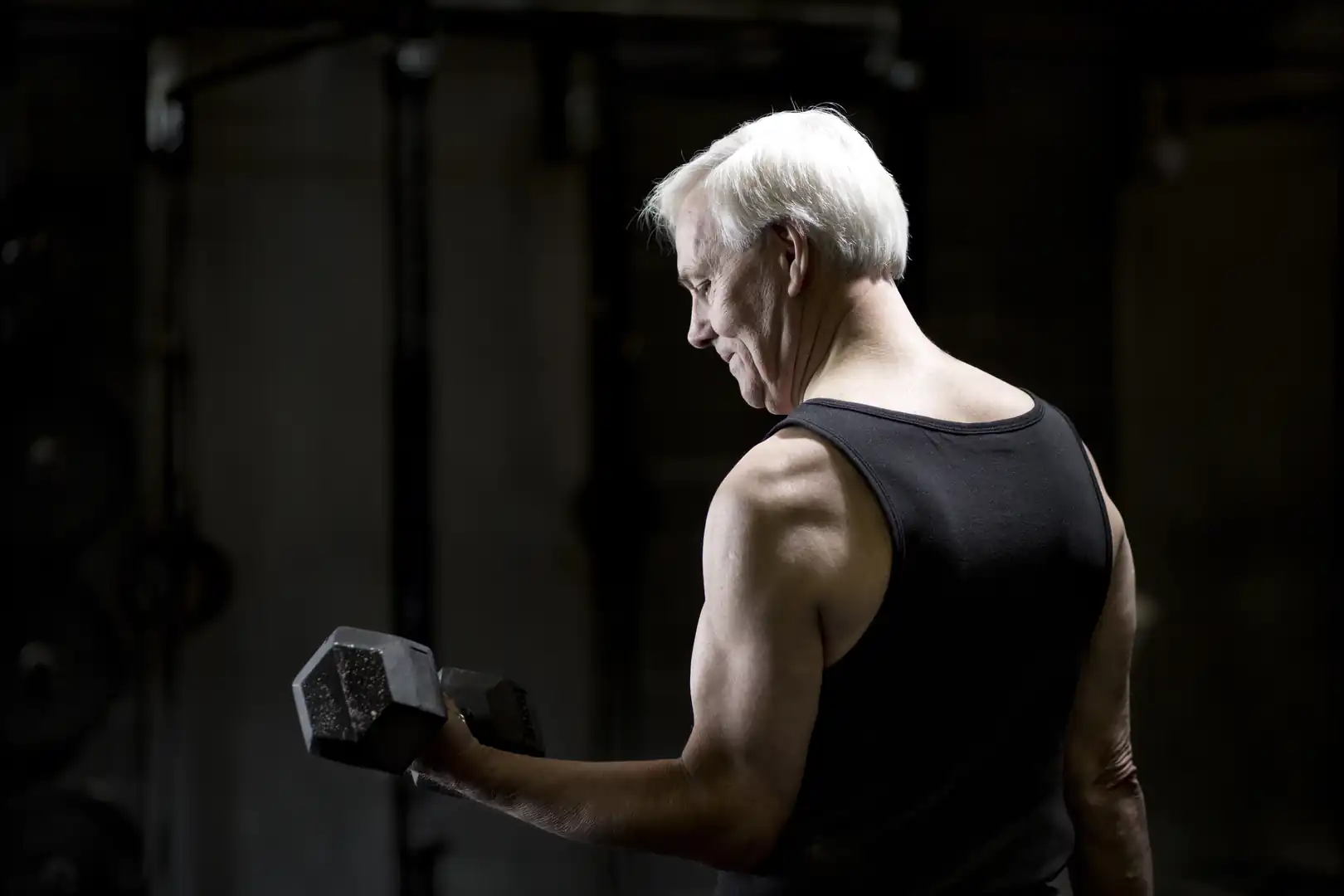
The Senior Fitness Myth: Why 'Taking It Easy' Is Actually Accelerating Muscle Loss
High-performing adults do not settle for average results in their careers. Yet, when it comes to personal longevity, many fall into a comfortable trap. You log 10,000 steps a day. You do a light yoga class on Saturdays. You go for casual weekend jogs and assume your health is protected.
It is a false sense of security. Passive movement keeps you mobile, but it does not preserve structural integrity.
Around age 30, human biology quietly shifts. You begin losing roughly 3% to 8% of your muscle mass per decade, a clinical decline known as sarcopenia muscle loss. Once you reach 60 years, that decay rate rapidly accelerates. Gentle cardio and light stretching do nothing to stop this underlying atrophy.
Precision matters. Because you cannot improve what you do not measure.
At Thesis, we reject subjective fitness routines. Preserving physical capacity requires objective biometric data, precise resistance loading, and systematic progressive overload for seniors. Guessing is the enemy of progress. If you want to maintain true physical autonomy for the next thirty years, taking it at a slow and steady pace is the single fastest way to lose it.
The Science of Sarcopenia: What Happens When You 'Take It Easy'
Biological decay does not pause for good intentions. Age related muscle decay is an active metabolic and structural breakdown. When you stick exclusively to low-load physical activities, your central nervous system adapts to the minimal demand. It selectively decommissions the precise tissues required for strength, balance, and explosive force.
Avoiding intensity accelerates three critical physiological failures:
- Fast-Twitch Fiber Atrophy: Light activities only recruit slow-twitch, endurance-based muscle fibers. Fast twitch fiber loss aging occurs rapidly without heavy external loads, dismantling the power generators that prevent sudden falls.
- Degraded Bone and Joint Integrity: Bones require mechanical strain to retain density. Without progressive resistance, bone mineral density drops, joints lose structural balance, and supporting connective tissues become brittle.
- Metabolic Deceleration: Muscle is active endocrine tissue. As muscle mass shrinks, basal metabolic rate plummets, insulin resistance rises, and systemic metabolic health declines.
Avoiding physical challenges creates a dangerous biological loop. Reduced force output weakens your structural base. Weakness compromises balance. Poor balance increases fall risk, triggering a cascade of frailty. Restricting your physical efforts to avoid discomfort actually speeds up the exact decline you are trying to avoid.

The Baseline Lie: Why Standard Gym Routines Fail Mature Adults
Standard fitness models are built on arbitrary templates. A commercial gym hands you a generic workout card, assigns an under-credentialed trainer, and hopes for the best. For high-achieving adults over 50, this approach is not efficient.
Arbitrary workouts create arbitrary results. Standard strength training for older adults often swings between two harmful extremes: complete under-loading or unmonitored hyper-aggression.
Under-loading is the silent killer. Lighter weights and high repetitions might raise your heart rate, but they fail to trigger muscle protein synthesis in aging tissue. Conversely, throwing heavy weights at a compromised spine or an unassessed joint causes instant injury.
The fitness industry runs on a gig-economy model. Trainers rarely possess clinical-grade diagnostic tools or advanced biomechanical knowledge. Loading a senior client without an accurate baseline assessment is reckless. Without tracking joint capacity, movement mechanics, and recovery capacity, standard routines accelerate joint wear while failing to stop muscle degradation.
Coordinated Wellness: The Thesis Approach to Heavy Loading and Recovery
Building true structural balance safely requires an integrated human ecosystem. Thesis operates under a unified standard. We pair progressive resistance training for seniors with real-time biometric fitness tracking, clinical physical therapy, and targeted nutrition.
We coordinate all aspects of wellness into a single, synchronized machine:
- Biometric Tracking: We track resting heart rate, recovery markers, baseline strength output, and sleep efficiency using clinical-grade metrics inside the Thesis App.
- Full-Time Authority: Every trainer, physical therapist, and recovery specialist on our floor is a full-time, salaried professional fully invested in your physical longevity.
- Cohesive Delivery: We harmonize progressive resistance work, soft tissue repair, targeted nutrition, and metabolic conditioning into a single machine.
We do not treat strength training as an isolated event. Your workouts, tissue repair, and metabolic health are managed with objective precision. We track resting heart rate, sleep efficiency, and baseline strength ratios using the Thesis App and integrated wearables, adjusting your training volume using cold, hard data.
Our floor is managed by full-time salaried specialists who are entirely invested in your long-term physical achievement. By introducing targeted progressive overload, we safely apply heavy, compound resistance work to stimulate fast-twitch muscle recruitment while protecting vulnerable joint structures.
Tailored Prescription: Building Structural Balance Without Injury
Transitioning from casual exercise to structured, heavy resistance must be executed with mathematical precision. We do not throw clients under a heavy barbell on day one. We follow a strict three-phase methodology to ensure maximum muscle adaptation with zero wasted effort.
- Phase 1: Biometric Mapping and Joint Assessment: We perform a full biomechanical evaluation to test joint ranges, tissue tolerance, and baseline strength output. This identifies hidden structural imbalances before we apply stress.
- Phase 2: Corrective Movement and Tissue Preparation: We restore proper joint alignment and repair faulty movement patterns. Our physical therapists work alongside strength coaches to prepare your tendons and ligaments for heavier loads.
- Phase 3: Controlled Progressive Overload: We introduce targeted compound loading, tracking the exact weight, tempo, and volume of every lift. This forces your nervous system to recruit fast-twitch fibers, driving muscle retention and dense bone formation.
How Thesis Coordinates Your Longevity and Performance
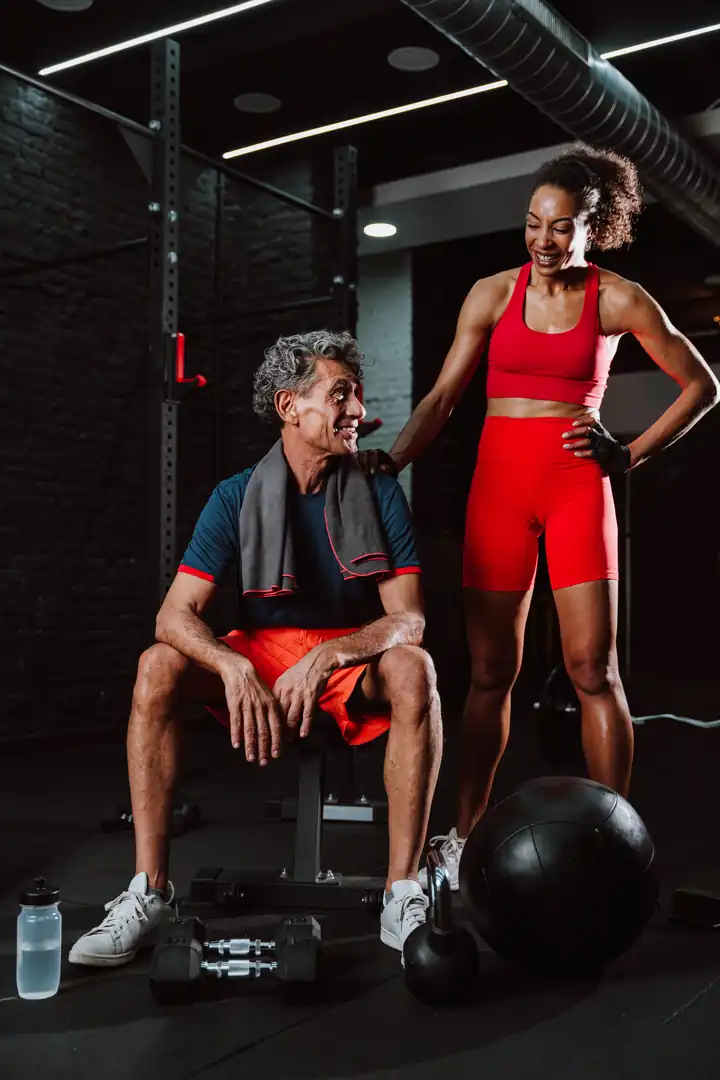
Maintaining peak performance into your 60s, 70s, and beyond requires an elite, white-glove infrastructure. Thesis removes all guessing from the equation. We provide everything required to protect your physical autonomy under one roof.
- Dedicated One-on-One Strength Coaching: Customized progressive resistance programs built around your specific baseline mechanics.
- Embedded Physical Therapy: On-staff physical therapists work directly on the gym floor to resolve joint issues before they turn into chronic injuries.
- Personalized Metabolic & Protein Optimization: Tailored nutrition protocols designed to fight age-related protein resistance and fuel tissue recovery.
- Continuous App-Based Monitoring: Real-time sync between your training metrics, recovery scores, and daily lifestyle data.
FAQ: Maximizing Physical Capacity as You Age
What distinguishes systematic load progression from simply picking up heavier dumbbells over time?
Systematic load progression is a controlled, data-driven methodology that carefully manages variable stress, force production, and total mechanical volume. Simply reaching for heavier dumbbells without assessing your recovery capacity or joint health invites injury. We track your baseline strength ratios and physiological recovery metrics to ensure load increases match your tissue adaptation rates precisely.
Can older individuals with back discomfort or stiff joints safely participate in intensive resistance work?
Back discomfort and joint stiffness are frequently caused by weak supporting muscles and poor structural balance. Under-loading weak tissues allows joint decay to continue unchecked. By combining physical therapy evaluations with tailored movement mechanics, we safely build surrounding muscle tissue to offload pressure from your spine and joints.
Why does habitual walking or routine endurance work fail to halt age-related muscle loss?
Endurance activities like walking only engage slow-twitch muscle fibers. These fibers are designed for aerobic energy, not force production or muscle mass retention. Stopping sarcopenia requires recruiting fast-twitch muscle fibers, which only respond to significant mechanical tension provided by progressive resistance work.
In what manner do physical therapists and performance coaches align during personal training for seniors sessions?
Our full-time physical therapists and performance coaches work as a unified team on the same floor. Your therapist analyzes joint restrictions, soft tissue capacity, and movement mechanics, then hands those parameters directly to your strength coach. This ensures every exercise during your personal training for seniors builds maximum muscle while respecting your structural boundaries.
Which specific health and physical metrics are evaluated during the initial baseline analysis?
Our diagnostic baseline evaluation measures baseline strength outputs, joint range of motion, movement quality, and structural balance ratios. We also integrate your resting heart rate, sleep quality, and heart rate variability metrics via the Thesis App to establish a complete physiological blueprint before prescribing any heavy movement protocols.
Take Control of Your Biological Trajectory
Avoiding physical challenges does not preserve your body. It dismantles it. Staying comfortable today directly compromises your independence, energy, and mobility tomorrow.
Reaching your peak physical transformation is a science, not a guessing game. You do not need shortcuts, and you do not need generic advice to "take it easy." You need objective metrics, structured mechanical loading, and a cohesive team managing your progress.
Are you ready to take control of your long-term health? Join us at Thesis for a complimentary performance baseline assessment to discover your current metrics.

Written by Ori Perlman
Ori Perlman is the Founder and CEO of Thesis. A former special operations combat specialist, Ori mastered peak physical conditioning before transitioning to the corporate world. While studying in Hong Kong, he built a premier training business helping high-power professionals optimize their fitness and physique around demanding schedules. Today, he leads Thesis in delivering data-driven, sustainable health transformations tailored for high-achievers.
Washington DC Services
Tysons Services
- Couples Personal Training Tysons
- Functional Strength Training Tysons
- HIIT Workouts Tysons
- Injury Prevention Rehab Tysons
- Muscle Building Tysons
- Nutrition Coach Tysons
- Personal Trainer for Seniors Tysons
- Physical Therapy Tysons
- Postpartum Personal Trainer Tysons
- Prenatal Personal Trainer Tysons
- Sports Performance Training Tysons
- Stretching and Mobility Tysons
- Weight Loss Tysons


